Closing Date Moved Up? How Hazard Insurance Evidence Works

CJ Hutsenpiller
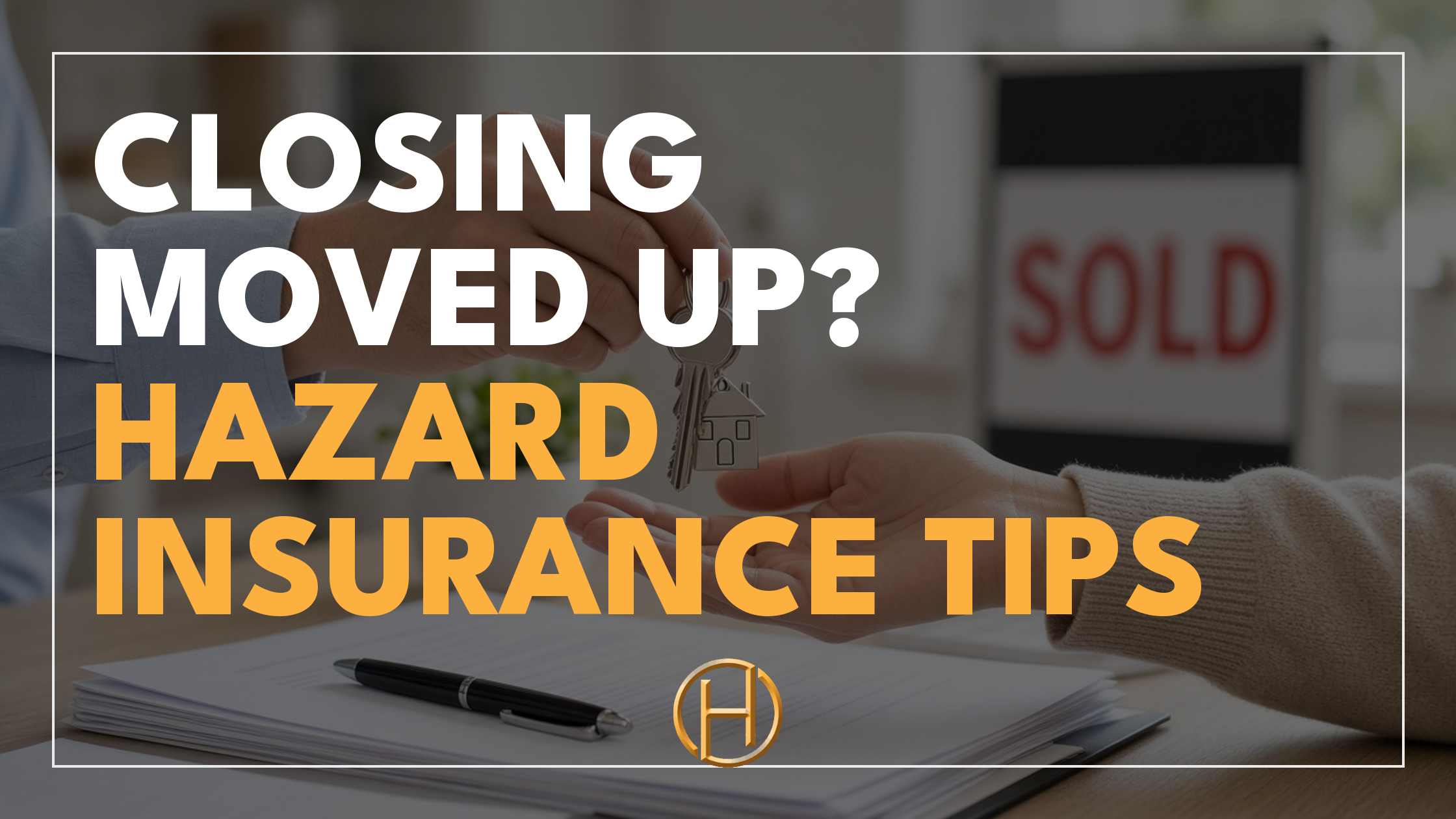
Buying a home comes with a lot of moving parts, and sometimes the closing date moves too. When a seller is ready early or a lender clears underwriting ahead of schedule, you might suddenly be closing days sooner than planned. One of the first things your lender will ask for is updated hazard insurance evidence.
A client recently called us in exactly that spot: closing moved up, and the lender needed proof of insurance with the new date right away. This guide explains what hazard insurance evidence is, what your lender needs, and how to keep a date change from derailing your closing.
The short answer
Hazard insurance evidence is proof that your new home will be insured on closing day, usually a binder, evidence of insurance, or declarations page. If your closing moves up, tell your agent right away so the effective date can be updated and new evidence sent directly to your lender and title company.
Key takeaways
- Lenders generally will not fund a mortgage without proof of homeowners coverage starting at closing.
- Evidence usually comes as a binder, evidence of insurance form, or declarations page.
- The effective date, property address, coverage amounts, and mortgagee clause must be correct.
- If your closing date changes, your agent can usually update the effective date and resend evidence quickly.
- Start your insurance early, ideally right after your offer is accepted. Rules vary by lender.
What hazard insurance means
"Hazard insurance" is a term lenders often use for the property coverage in a homeowners policy. It protects the home's structure against covered perils like fire, wind, hail, and theft. In everyday terms, it usually just means your homeowners insurance.
Lenders require it because your home is the collateral for your loan. If the house is damaged and uninsured, the lender's investment is at risk. For more on what a homeowners policy covers, see what does homeowners insurance cover and not cover.
Hazard insurance is not flood insurance
Standard homeowners policies typically exclude flood. If your home is in a high-risk flood zone and you have a federally backed mortgage, your lender will likely require separate flood coverage too. Learn more in flood insurance in Tennessee.
Types of hazard insurance evidence
Insurance binder
A binder is a temporary document confirming coverage is in place while the full policy is issued. Binders are common for new purchases because the policy may not be fully processed by closing.
Evidence of insurance form
Many agents send a standardized form that summarizes the policy: insured name, property address, policy period, coverage amounts, deductibles, and mortgagee information.
Declarations page
The declarations page is the summary page of the actual policy. Some lenders prefer it, especially for refinances.
Your lender may say which form it wants. If not, ask.
What your lender usually wants to see
- Named insured: Your name, matching the loan documents.
- Property address: Exactly as it appears on the purchase contract and loan.
- Effective date: On or before your closing date.
- Dwelling coverage: Many lenders want coverage at least equal to the loan amount or estimated replacement cost. Requirements vary by lender.
- Deductible: Some lenders cap deductibles, often as a dollar amount or a percentage of dwelling coverage.
- Mortgagee clause: Your lender's exact name, address, and "ISAOA/ATIMA" wording if required, plus your loan number.
- Premium and payment: Many buyers pay the first year's premium at closing. Lenders or title companies often want an invoice or paid receipt.
Your loan processor may send a list of insurance requirements. Share it with your agent so nothing is missed.
Have a question about your own policy? Our Tennessee team is glad to help. Call 615-773-2886 or send us a quick message and we will get back to you.
What to do if your closing date moves up
- Call your agent right away. Give the new closing date and any new lender or title contacts.
- Confirm the effective date. Your agent can update it so coverage starts when you take ownership.
- Share lender and title contacts. Include your loan officer, processor, and closer, plus email addresses.
- Ask for updated evidence to go directly to them. This saves you a step and avoids delays.
- Confirm payment arrangements. Make sure the first-year premium shows on your closing disclosure or is paid another way.
- Follow up the day before closing. A quick check with your lender confirms they have what they need.
What if the closing date moves later?
Delays happen too. Tell your agent so the effective date can be moved. You generally do not want to pay for coverage on a home you do not own yet, although a short overlap is not unusual.
How to avoid last-minute stress
Start your quote right after your offer is accepted
Do not wait until the week of closing. Starting early gives your agent time to shop carriers and answer underwriting questions.
Answer underwriting questions early
Carriers often ask about:
- Roof age and material
- Age and updates of electrical, plumbing, and heating systems
- Square footage and construction type
- Prior claims on the property
- Pools, trampolines, wood stoves, or dogs
Your inspection report and seller's disclosures help. Roof age is a big one in Tennessee. See understanding roof coverage in home insurance.
Watch inspection findings
An older roof, outdated wiring, or other issues may limit which carriers will insure the home or change pricing. Knowing early lets you negotiate repairs or credits with the seller.
Understand your deductible options
Many Tennessee policies include separate wind and hail deductibles. Read high wind and hail deductibles before choosing.
Special situations
- New construction. You may need builder's risk coverage during construction, then a homeowners policy at closing.
- Rental or investment property. A landlord or dwelling fire policy is usually needed instead of a standard homeowners policy. See buying a Tennessee rental from out of state.
- Condos. You will likely need an HO-6 policy, and the lender may also ask for the HOA's master policy certificate.
- Refinances. Your lender may need the mortgagee clause updated on your existing policy.
After closing, your escrow account will handle future renewals. Learn how that works in escrow accounts and midterm insurance changes.
Common closing-day insurance mistakes
Most insurance problems at closing come from small, avoidable issues. Watch for these:
The wrong lender name or loan number
A mortgagee clause that does not exactly match your lender's required wording can cause the lender to reject the evidence. Always use the clause your lender provides.
An address that doesn't match
A unit number left off, a misspelled street, or a different city name can cause delays. Compare the evidence to your purchase contract.
Coverage that doesn't meet lender requirements
If dwelling coverage or the deductible falls outside your lender's rules, you may need to adjust the policy before closing. Ask your loan processor for requirements early.
Forgetting the premium payment
If the first-year premium is not on your closing disclosure and you haven't paid it another way, the lender may hold up funding. Confirm payment with your agent and closer.
Waiting until the last minute
The closer you get to closing, the less room there is to fix problems. Starting early is the single best way to avoid stress.
A homebuyer's insurance timeline
Here is a simple timeline many buyers follow. Your lender's timeline may differ.
- Offer accepted: Contact your agent and start a quote.
- After inspection: Share inspection findings, especially roof and systems details.
- About two to three weeks before closing: Choose your coverage and confirm lender requirements.
- About one week before closing: Your agent sends evidence to your lender and title company.
- If the date changes: Call your agent right away for updated evidence.
- Closing day: Coverage starts and you get the keys.
- After closing: Review your full policy documents and set up escrow if applicable.
Frequently asked questions
What is hazard insurance evidence for a mortgage?
It is proof that your home will have homeowners coverage starting at closing. It is usually a binder, evidence of insurance, or declarations page listing your lender as mortgagee.
How fast can I get proof of homeowners insurance?
If your policy is already set up, an agent can often update and send evidence the same day. Timing depends on the carrier and underwriting, so start early.
What happens if my closing date changes?
Tell your agent so the effective date can be updated, then make sure new evidence goes to your lender and title company.
Do I have to pay the first year of homeowners insurance at closing?
Many lenders require the first year's premium paid at or before closing, often through your closing costs. Requirements vary by lender.
What is a mortgagee clause?
It is the section of your policy that names your lender, usually with its address and loan number, so the lender is protected and notified about the policy.
Is hazard insurance the same as homeowners insurance?
Usually, lenders use "hazard insurance" to mean the property coverage in your homeowners policy. A full homeowners policy also includes liability and personal property coverage.
We move fast for closings
We know closing dates change on short notice. At Hutsenpiller Insurance, we work directly with lenders and title companies across Middle Tennessee to get the right documents where they need to go, so you can focus on the move. For more on choosing coverage, see our Tennessee homeowners coverage guide. Call us at 615-773-2886 or fill out the form below, and we will help keep your closing on schedule.
Talk to a Hutsenpiller Insurance agent
Tell us a little about what you need, and a licensed agent will reach out. No pressure, just straight answers.